Culinary Uses & Everyday Applications
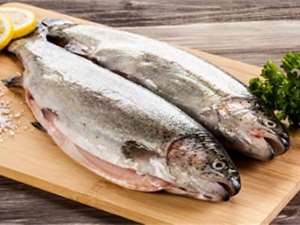
This whole frozen Atlantic salmon can be roasted whole, portioned into fillets or steaks, or prepared in batches for meal planning.
🐟 Roasted Whole Centerpiece
Roast the salmon whole with herbs, citrus, and seasonings for a shared family meal or special occasion.
🥩 Steaks & Fillets
After thawing, portion the fish into fillets or steaks for grilling, baking, pan-searing, or air frying.
🍱 Batch Cooking & Meal Prep
Prepare multiple portions at once and refrigerate leftovers for use in salads, rice bowls, sandwiches, or other seafood-based meals.
How to prepare & roast whole salmon
01Thawing: Thaw the salmon in the refrigerator for approximately 24 hours, placing it in a suitable dish to contain any liquid. For faster thawing, keep the fish in a leak-proof bag and thaw under cold running water.
02Prep & Season: Preheat the oven to 218°C (425°F). Pat the fish completely dry inside and out using paper towels. Drizzle with olive oil and season thoroughly with salt and pepper. Stuff the cavity with herbs, citrus, or other aromatics if desired.
03Roast & Broil: Place the fish in the middle of the oven and roast for approximately 20–30 minutes, depending on its size and thickness. Check the thickest part with a food thermometer and continue cooking until the internal temperature reaches 63°C (145°F). If desired, switch the oven to broil and move the fish to the upper part of the oven for 3–5 minutes, watching closely until the skin is golden and crisp.
*Cooking times are approximate and vary according to fish size, thickness, starting temperature, and oven calibration. Always use internal temperature as the final guide.
Recipe: Oven-Roasted Whole Salmon with Lemon & Herbs
15 min Prep | Approx. 35 min Cook | Sharing Dish
Directions
01Preheat the oven to 218°C (425°F). Line a large baking sheet with foil.
02Pat the thawed salmon dry inside and out using paper towels. Drizzle olive oil inside the cavity and over the outer skin.
03Season generously with salt and black pepper inside and out. Stuff the cavity with lemon slices, fresh dill, parsley, and smashed garlic.
04Roast on the middle rack for approximately 20–30 minutes, depending on the size and thickness of the fish. Check the thickest section with a food thermometer and continue cooking until it reaches 63°C (145°F).
05If desired, turn the oven to broil, move the tray to the upper part of the oven, and broil for approximately 3–5 minutes, watching closely until the skin turns golden and crispy. Serve warm.
| Average Nutritional Values (raw) | Per 100 g |
| Calories | 177 | * |
| Total Fat | 11 g | 14% |
| Saturated Fat | 2.6 g | 13% |
| Cholesterol | 47 mg | 16% |
| Sodium | 50 mg | 2% |
| Total Carbohydrates | 0 g | 0% |
| Dietary Fiber | 0 g | 0% |
| Sugars | 0 g | |
| Protein | 17 g | |
| Vitamin D | 9.3 µg | 47% |
| Calcium | 8 mg | 1% |
| Iron | 0.3 mg | 2% |
| Potassium | 309 mg | 7% |
*Percent values are based on a 2000-calorie diet.
Storage
Proper frozen storage helps maintain product quality.
01Keep Frozen: Store continuously at −18°C (0°F) or below until ready to thaw and prepare.
02Keep Sealed: Keep the salmon in its original packaging while frozen to help minimize moisture loss and reduce the risk of freezer burn.
03Delivered Frozen: Delivered via insulated cold-chain logistics across Metro Manila or available for pickup in Makati City.
Shelf Life
Refer to the product packaging for the applicable best-before date.
01Refrigerated Thawing: Once thawed, keep the salmon refrigerated for up to 24 hours. Keep frozen at −18°C (0°F) or below until the best-before date indicated on the packaging.
02Refreezing: For best texture and quality, avoid refreezing once thawed.
03After Cooking: Refrigerate leftover cooked salmon in an airtight container and consume within 2 days.